
Search strategy survival kit: SEO & PPC tips for the AI search era
Aug 26, 2026

SEO and PPC strategy for the AI search era requires a different approach than traditional search marketing. This guide covers the practical tactics apartment marketers need to stay visible as AI changes how renters find and choose their next home.
Here’s what you’ll learn
Why strategies are changing
Search has changed. Renters used to type a few words and scan a list of links. Now they ask full questions, get AI-generated answers and follow recommendations without clicking. If your marketing was built for an earlier version of the renter journey, it might not hold up.
The good news? You don’t have to start over to succeed. Think of it as a search strategy survival kit — a practical set of SEO and PPC tips from search experts Kyle Jones and Gretchen Walker to help you stay on track no matter where the trail goes. Here’s what’s inside.
How to build your SEO basecamp for AI search
Everything starts here. Before you chase anything new, make sure your SEO is squared away. Three things matter most: renter questions, unique page content and strong trust signals.
Answer real renter questions
Here’s a quick gut check for any piece of content you create: Is this answering a question a renter has, or is it marketing copy?
Marketing copy has its place. But if you want to show up in traditional and AI search, answering real questions is what makes a difference. Build content around what renters want to know, written in the words they use. FAQs are an easy place to start (and here’s a handy guide to FAQs for apartment websites), but the same thinking applies everywhere.
Don’t stop at the operational stuff like application fees and pet policies. Be a local guide too. Answer the kinds of questions renters ask before they ever fill out a guest card:
- How far is the property from the airport?
- What’s there to do in the surrounding neighborhood?
- Which major employers are within a reasonable commute?
Cover the full range of questions a renter might ask in conversation with an AI engine.
Make every page uniquely useful
This guidance matters more in AI search than it ever did in traditional search.
Traditional search reads a page as part of a whole website. AI search cares about individual answers. So if your amenities page spends a paragraph on floor plans, and your floor plans page name-drops the neighborhood in passing, you’re blurring the lines. Give each page one clear job. Turn your neighborhood page into a real neighborhood guide. Let your amenities page be about amenities.
Then give people something to do once they land. Pair content that ranks well with media and tools that pull renters in, like an interactive map, a virtual tour or points of interest they can click into. When someone searches, lands on your page and engages, that’s a signal back to Google that you delivered a good answer. It’s a feedback loop, and engagement fuels it.
Making each page uniquely useful is much more important in AI search than it was in traditional search. In traditional search, a web page is part of a website. In AI search, we care about individual answers. — Kyle Jones
Another way to build more useful pages is to make information easy for search engines and AI platforms to read. Schema markup is the simplest way to do that, since it translates your details into a language the engines understand. Schema markup is structured code added to a webpage that tells search engines and AI platforms exactly what the content means — your property name, floor plans, reviews and amenities, labeled in a format the engines can read directly.
Send stronger trust signals
Search engines want to know they can trust you. And they won’t just take your word for it. They ask around. They look at who else is talking about you across the web and whether that information matches what you say about yourself. One source might be right or wrong. Fifty sources that agree build real confidence.
So keep your property facts consistent everywhere: your website, your listings and your business profiles. That means your name, address and phone number — what marketers call NAP consistency — line up across the board.
It’s also important to have recent reviews and respond to them like a human. Reviews matter more than ever, since AI engines read them as proof of real resident experience, not just polished marketing.
How to create smarter PPC campaigns for the AI era
Now that you have a handle on your SEO foundation, let’s look at your pay-per-click strategy. Both SEO and PPC are search essentials in the AI era. When it comes to paid ads, you don’t need more strategies … you need the right ones. Here’s how to make your paid search work harder in the AI era.
Match campaigns to renter intent
Picture two renters. One searches “apartments in Denver.” The other searches “two-bedroom apartments near Coors Field under $2,000 available now.” Same city, completely different people. One is browsing. One is ready to sign.
Those two moments deserve two different campaigns. Broad discovery searches are high volume but low commitment. These renters are still figuring out where they want to live and what they can afford. Give them their own campaigns with a broader strategy, awareness-level messaging and lifestyle creative.
High-intent searches are specific. Think unit types, move-in timelines and amenities. These renters need tighter targeting, copy that gets straight to the point and a landing page that shows them exactly what they searched for. Don’t send someone asking about pricing to your photo gallery.
If you try to serve both moments with one budget, you’ll underserve both. And remember, getting the click is only half the job. Once renters land, they need to engage to close the feedback loop. That’s the positive signal that tells Google your campaign is working.
Use AI Max with guardrails
AI Max expands your keyword matching using AI, uncovering renter searches you’re probably missing today. It casts a wider net, and Google reports advertisers see around 7% more conversions at a similar cost when they use the full AI Max feature suite.
In multifamily, though, proceed with care. A wider net can pull in people looking to buy a home, or students when you don’t offer student housing. Keep it focused with a strong negative keyword list. Campaign structure isn’t just a best practice anymore. It’s how you keep AI pointed at the right renters. Also make sure that your conversion tracking elements are there. That you’re tracking tours and applications, not just clicks.
Run campaigns that convert
Your high-performing multifamily PPC campaign needs four things:
- Clean data: Start with an accurate, connected campaign and property information
- Fresh creative: Refresh images, video and messaging regularly
- Clear goals: Optimize for meaningful renter actions (not clicks alone)
- A sanity check: Measure, assess and adjust at defined times
When it comes to creative, real footage wins. A 15-second walkthrough of your actual property, like the rooftop, the dog park or the view from a real unit, will outperform staged stock imagery every time.
For that sanity check, watch whether your automated campaigns have enough to work with. Performance Max needs roughly 50 or more conversions a month to exit its learning stage and optimize effectively. Whether you hit that depends on your property, budget and market. If you can’t get there, Performance Max might not be the right campaign type for you right now. The communities winning with automation aren’t the ones who handed Google the keys. They’re the ones who set themselves up for success from the jump.
Go beyond the click
This is where a lot of PPC accounts leave money on the table. Google’s AI bidding optimizes toward whatever signal you give it. Tell it to chase form fills, and it will find people to fill forms. But in multifamily, a form fill can be a genuinely interested renter or it can be a vendor inquiry, a wrong number or someone who filled out the same form on six other listings. AI can’t tell the difference unless you teach it.
So measure what moves the needle. If you track phone calls, and you should, set a duration threshold. A 90-second call is likely a real leasing conversation. A 12-second call is likely a misdial. Track them separately and feed only the qualified calls back to Google. Tour bookings are gold, too. A renter who schedules a tour is telling you something a form fill never could. The same goes for application starts, completions and lease conversions.
Review your targeting, search terms, geographic performance and conversion quality on a regular cadence. If an agency runs your PPC, they should be doing this for you and adjusting as they go. Then reallocate with conviction toward whatever produces qualified renters.
Don’t keep a budget on a campaign just because that’s what you’ve always done. Look at the data, take away the bias and double down on what’s actually working. The future advantage isn’t going to come from having more AI. It’s going to come from having better data. — Gretchen Walker
Your 5-tool search survival kit
Everything above comes down to five things to do so you can survive — and thrive — when marketing to renters in the AI era.
- Know the questions. Learn what renters are asking, not just what you assume they want to know.
- Publish the answers. Work those answers into as many places as possible, from your website and listings to your social channels.
- Check the facts. Find and fix any missing or mismatched details about your property across platforms.
- Refresh the campaign. Keep your paid creative and landing page content fresh, consistent and authentic.
- Measure what matters. Chase high-intent traffic, not just any traffic, so you can put more heads in beds.
Hit the trail
The way renters search has changed, and AI now touches every step, from the first question they type, to the ad they see, to the system deciding whether to show it. But your SEO and PPC strategy doesn’t need to be rebuilt for AI search. It just needs to be more intentional and better fed.
Our recommendation? Pick one SEO improvement and one PPC improvement to make this week. Start with a single property. Make the change, measure the results and keep going. And if you need help, we’re always here for you. Get in touch.

Recent posts

The most dangerous marketing metric? It’s the one you look at alone. See three examples of multifamily metrics that tell a misleading story.
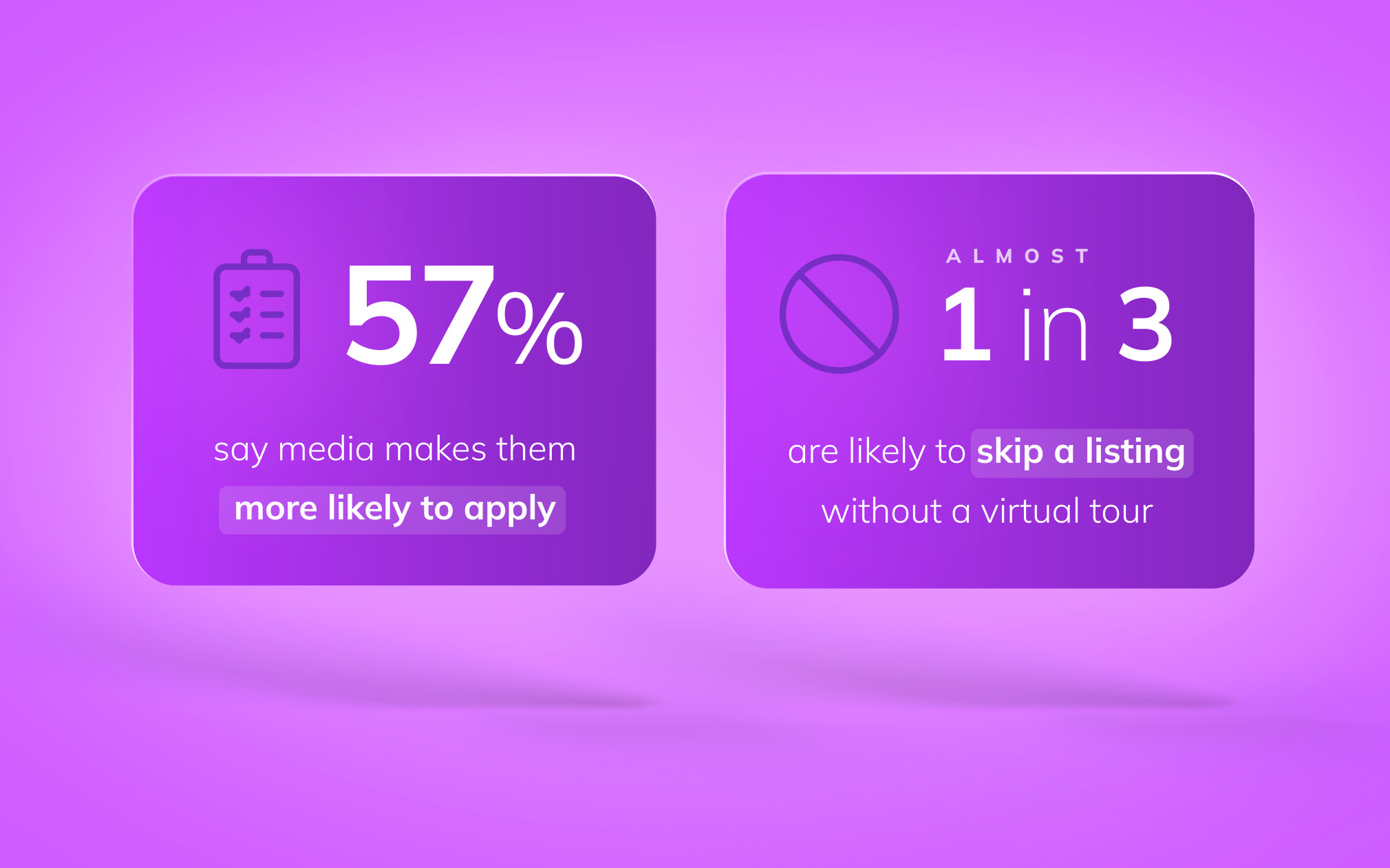
New survey data from 11,320 renters reveals how media shapes the leasing decision — and what your listings need to show.

We’re living through the biggest shift in search marketing since the search engine was born. To help you make sense of it, Catriona Orosco, senior director at REACH by RentCafe, sat down with Robert Gibbs, head of agency at Google, to talk through what’s actually changing in search and paid search.
Categories
Similar articles
Google search advertising for multifamily: What’s next, straight from Google
We’re living through the biggest shift in search marketing since the search engine was born. To help you make sense of it, Catriona Orosco, senior director at REACH by RentCafe, sat down with Robert Gibbs, head of agency at Google, to talk through what’s actually changing in search and paid search.

GEO vs. SEO: What apartment marketers need to know
Explore this updated guide to generative engine optimization and find out what you need to know as an apartment marketer.

How to prep your website content for AI search
Adapt your apartment website content for AI search without hurting your SEO. Boost AI citations with 5 practical updates to structure, specificity and FAQs.