
How to prep your website content for AI search
Aug 5, 2026

Good news: Adapting your content for AI search doesn’t mean starting over.
“Content is king” has been around for well over a decade, and instead of fading, it’s only gained importance. From lexical search to semantic search to the new world of GEO and AI search, what counts as good website content keeps getting pushed to be clearer, more naturally written and more user focused. That continuum works in your favor — if you’ve been creating good content already, you don’t need to revolutionize your strategy. You just tweak it using updated best practices, measure the results, then adjust again.
Today we’re covering five updates to start adapting your content for AI search without hurting your rankings in traditional search along the way. While content might be king, traditional organic search (SEO) currently remains supreme when it comes to lead and lease performance.
Learn more about these important content updates for AI below:
- Structure your content into clear, standalone sections
- Write with specificity and clarity so answers stand on their own
- Build conversational FAQs made for AI search
- Use blogs for long-form, topical content
- Tag real people as authors to build expertise
Content structure
The major difference in content strategy for AI search boils down to a fundamental difference between search engines and LLMs.
Search engines index webpages, not websites. LLMs care less about individual pages or even collective websites than they do about clear, standalone answers that are easy to read and pull from.
For SEO, that means you need to treat each page somewhat independently while simultaneously considering the content as part of a broader optimization strategy.
To update your content for AI search, start with your homepage. Break content into specific, labeled sections rather than a few romance paragraphs that combine a lot of elements. Think labeled neighborhood, amenities and floor plans sections a user and an AI crawler can spot at a glance.
A few easy structural moves:
- Use H2s, H3s and bullet points — literal structural elements an LLM can extract cleanly
- Give high-value amenities their own header with a short, clear explanation of why residents care
- Add a bullet or bold for emphasis inside each section
You can extend this to the inner pages of your website, too, but don’t risk your SEO performance too much today. Does your amenities page really highlight why residents love the amenities you offer? If your location is a huge attraction, the amenities page is a great place to be highly specific about how the location is an amenity of the property itself. This allows you to keep the neighborhood page better focused on the surrounding neighborhood.
Lastly, make sure your website has schema markup (structured data) in place. This is arguably the single most important ‘structural’ element to your website and content strategy for AI search. If you have a RentCafe website, this is already taken care of for you with robust ApartmentComplex and LocalBusiness schema types built-in by default.
Specificity & clarity
AI search doesn’t send users to a webpage or even a website. It extracts answers from them, reconfigures answers from multiple sources and synthesizes that information into a single answer. That means traditional elements like keyword density or anchor text optimization don’t have the same weight in AI search as they do in SEO.
Because AI search functions on that extraction and synthesis framework, the specificity and clarity of each sentence and paragraph matter a great deal when it comes to the likelihood of being cited in AI search. This is a big reason why clear structure also matters. Content structure and specificity and clarity are inherently tied together.
We encourage you to think about the literal shape or form of your content in this analysis, and ask yourself the following:
Do you have content that is modular and self-contained? In other words, content that is specific and easily understood without additional context? That doesn’t necessarily mean you need to completely overhaul your content on every page, but you should specifically bake in places on your website for sectionalized content that is modular and self-contained. Examples of this include homepage sections, specific inner sections with headers, and, as we will get to shortly, FAQs.
Another easy website content update is to literally be more specific. If your property is near a major hospital that many renters work at, don’t say you are “close to XYZ hospital,” say you are “.75 miles away from XYZ hospital.” Instead of saying “a short drive away,” say a “10-minute drive.” Being close is a subjective opinion, while being .75 miles or 10 minutes away is a clear fact.
GEO FAQs
If you’ve read or seen anything we’ve put out around AI search, you already know that we love frequently asked questions as a tool in the AI search tool belt. That’s because FAQs are the perfect intersection of so many things that are ideal for AI search citations:
- They match the question-and-answer format of AI search.
- They offer the chance to provide clear, modular, self-contained answers to real questions that users might ask.
It’s important to note that there is a nuance between FAQs for AI search and traditional FAQs:
- Traditional FAQs tend to answer questions a user might have once they’re already on a website and considering the logistics of applying or living at a property.
- Conversational, GEO FAQs more closely mirror the questions users ask during the rental journey, like which neighborhoods are good for young professionals or offer easy access to nearby hiking.
Think about what makes your property truly appealing to the people who rent with you or the things about your property that distinguish it most from the competition and craft FAQs around those. Need help? Read this next: 4 ways to optimize FAQs for apartment websites
FAQs are also easily structured both within the answer to the question with headers, bullets points, etc., and with FAQ schema. If you use a RentCafe website and our built-in FAQ functionality, all your FAQs are marked up with schema.
Blogging
Blogs are a great way to add another form of content that is very hard to place elsewhere on an apartment marketing website: long form and topical content.
While highly generic blog posts about spring cleaning are not as valuable in AI search as they might have been back in the older SEO days, highly specific and topical blogs can be a great place to achieve content citations.
For instance, if you have an amazing farmer’s market down the road from your property every Saturday, a blog post is an ideal avenue to create long form content that gives you lots of at-bats to create modular content more likely to be cited in AI search. When someone asks ChatGPT or Perplexity about farmers markets or weekend life in your city, that specific, local content is what’s available to be pulled into the answer — and your property comes along with it. Some AI tools also carry personalization forward, so a renter who has shown interest in farmers markets may see that reflected when they start an apartment hunt. The more specific your content, the more chances it has to surface.
With AI search and citation, it’s not necessarily about targeting a bunch of different keywords with your content across your different pages. It’s about focusing on some specific high value elements like your location or amenities or on-site staff, and creating unique, high-value content around all those different elements. Get more insight in our article about how blogging boosts your SEO.
Content authorship
Another great aspect of blog posts is the ability to tag people as blog authors and start developing user-level personas of expertise.
AI is always trying to understand what the consensus opinion is that can be returned as a single answer to a question, and one of the places AI looks to for that is user-generated content.
While blogs and blog authors are 1st party, and not 3rd party user-generated content (the holy grail of UGC), they are still valuable and another tweak you can make to increase your odds of citation.
To actually leverage this advantage, it’s best to have blog author names of people who really work on-site or for the company instead of blog_author1X23 or other generic items.
As this person posts good, high-quality content over time, the perception of expertise will rise.
Put your website content to work
- Break your homepage into labeled, standalone sections
- Add schema markup, built in by default on a RentCafe website
- Swap vague claims for specific facts — distances, times, numbers
- Add conversational FAQs that mirror the rental journey
- Publish specific, topical blogs tied to your location and amenities
- Tag real on-site or company authors to build expertise
The bottom line
AI search rewards content that’s clear, specific and easy to extract. You don’t need to tear down what’s working. Structure your pages into standalone sections, lean into specific details (.75 miles, not “close by”), create conversational FAQs, use blogs for topical long-form content and tag real authors to build expertise. Make these tweaks, measure, then adjust again. Traditional SEO still runs the bases when it comes to leads and leases, so protect it while you build your AI search advantage. Remember, when you need help, our team is always available for a free SEO consultation.

Recent posts

The most dangerous marketing metric? It’s the one you look at alone. See three examples of multifamily metrics that tell a misleading story.
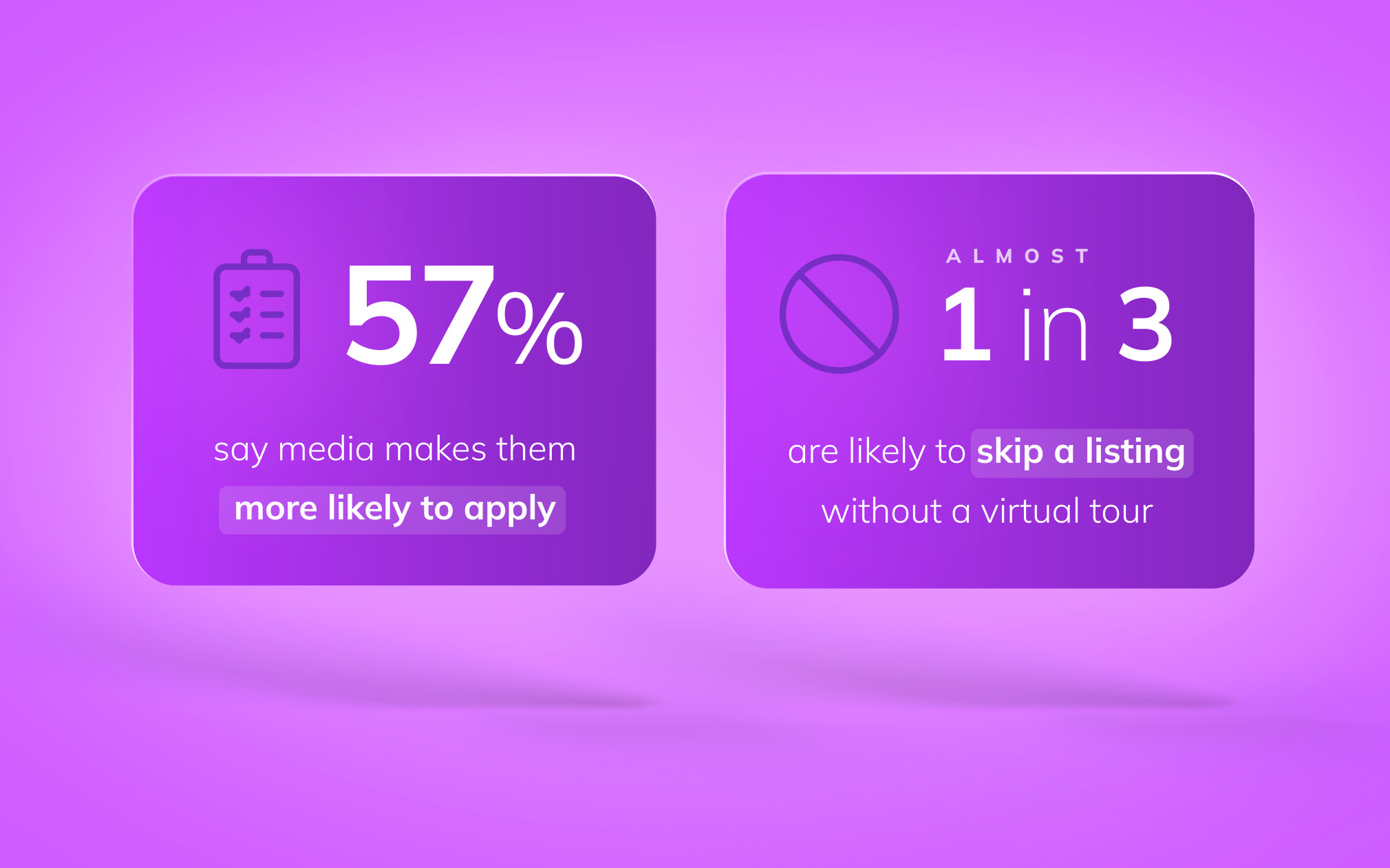
New survey data from 11,320 renters reveals how media shapes the leasing decision — and what your listings need to show.

We’re living through the biggest shift in search marketing since the search engine was born. To help you make sense of it, Catriona Orosco, senior director at REACH by RentCafe, sat down with Robert Gibbs, head of agency at Google, to talk through what’s actually changing in search and paid search.
Categories
Similar articles
Google search advertising for multifamily: What’s next, straight from Google
We’re living through the biggest shift in search marketing since the search engine was born. To help you make sense of it, Catriona Orosco, senior director at REACH by RentCafe, sat down with Robert Gibbs, head of agency at Google, to talk through what’s actually changing in search and paid search.

Cookie consent for apartment websites: What marketers need to know
Get a better understanding of cookie consent for apartment websites. Find out what you need to know about your options, state laws and how they impact your analytics.

Search strategy survival kit: SEO & PPC tips for the AI search era
Rental search has changed. Here’s how you should update your SEO and PPC strategies to stay visible in the AI era.