
Neighborhood apartment marketing: 3 things to do now & how to track results
Sep 10, 2025
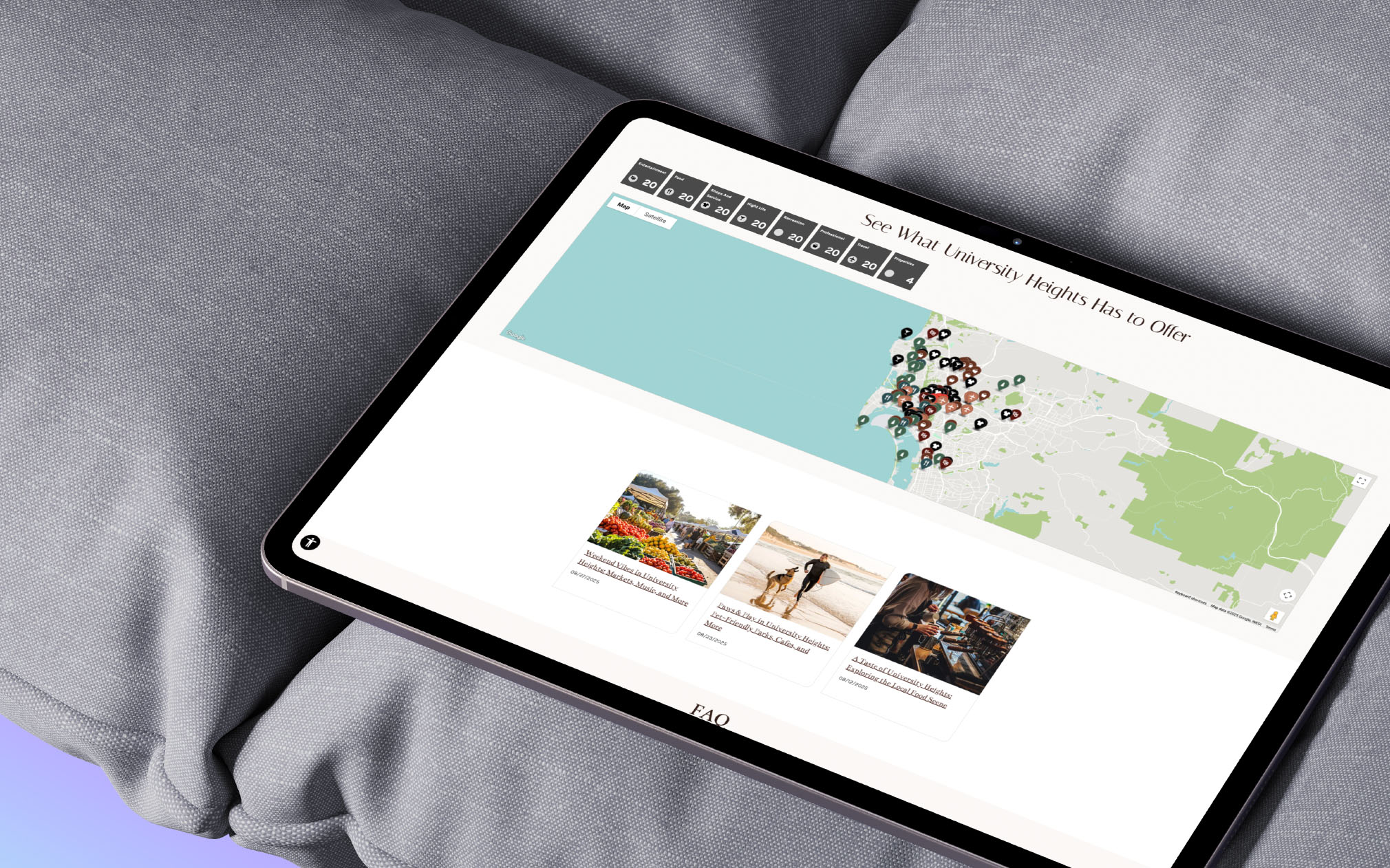
Think back to the last time you looked for housing. When searching online, did you start with the exact street you wanted to live on? Probably not. You likely searched different areas and neighborhoods first. You may have looked at nearby schools, companies or parks that were appealing or convenient.
You’re not alone. This type of rental search is what drives the need for neighborhood marketing. It’s an effective, targeted strategy for reaching renters during those earlier search queries, higher up the marketing funnel.
Not familiar with neighborhood apartment marketing? We recommend reading our introduction to neighborhood marketing article to get a better understanding.
In this article, we’re diving deeper with three things you can do now to market your neighborhoods. You’ll also get guidelines to help measure your success.
Ready to get started?
Jump ahead
Quick intro to neighborhood marketing
Neighborhood marketing = collectively marketing your properties in a given area, all together.
It’s a strategic way to reach high-intent leads at the right time, like during their early, neighborhood-level searches.
3 things you can do now to market your neighborhoods
If you’ve read that intro article we mentioned, you know we explained a few neighborhood marketing strategies. One was to build a neighborhood website or page.
For the sake of this article, we’re focusing on neighborhood pages, but these tactics apply to neighborhood websites too.
City pages can use a similar strategy if there aren’t known or defined neighborhoods. If you have multiple properties in the same city, a landing page with city highlights can help you stand out as a resource for prospects.
Keep reading for three things to do now to make your pages successful.
1. Focus on page structure
First things first, how should you structure your neighborhood pages?
At its core, your page should spotlight a group of properties and the surrounding neighborhood. You want to highlight your properties, the local lifestyle, things to do and specific places.
Take San Diego as an example … North Park isn’t super walkable, but it’s a well-known neighborhood that renters like. It makes sense to group properties in that area together and make that community the focus of your page.
Your page should include:
- A dedicated place to feature properties
- Copy and images tailored to the neighborhood
- Neighborhood content and FAQs (learn more below)
For featuring properties: Once you’ve established your group of properties, create a space to feature them. It should be easy for renters to see details like address, pricing and number of bedrooms available.
For copy and images: Is the neighborhood in a suburban area with great walking trails? Write sharp copy that speaks to that, then include images of people outside, enjoying their surroundings.
It’s important to consider your audience too. Make sure your copy and imagery align with what prospective renters are looking for. Even stock photos can work well if selected carefully.
2. Publish neighborhood content
You’ll need a smart content strategy for neighborhood marketing.
To stand out in SEO (search engine optimization), AEO (answer engine optimization) and GEO (generative engine optimization), you should continuously create high-quality content that renters find helpful and relevant. Make sure you set a pace that’s realistic for your marketing team.
Your best bet is to create neighborhood-focused blog posts, plus social posts to expand your reach.
Blogging helps your neighborhood page:
- Get organic traffic
- Keep renters engaged
- Become a trusted resource
Think of blog posts as enhanced FAQs (which we’ll cover below). They’re meant to explain topics, answer questions, share expertise and inspire readers to take action. In your case, the action is learning more about your properties.
If you’re not sure where to start, here are some topics we recommend:
- Neighborhood life: Share why the area is a great place to live, work and play. You want renters to see why your neighborhood is better than others.
- List what’s local: Create posts that list the specifics. What are the top five restaurants in the neighborhood? What about the best parks?
- Current events: Is something fun circulating in the local news? Write about it. This gives renters a peek into what’s happening in the community.
- Property highlights: Talk about what makes your properties special. Spotlight community staff, share great amenities or show off units with a virtual tour.
Note that property highlights shouldn’t be the main topic on your blog, but don’t leave it out. The goal is to have a range of neighborhood-focused topics that interest and inform renters.
As for social media: It’s a great place to feature your blog posts! This can help them surface more in search results, and give your brand better exposure. You might also consider featuring local businesses on social (another way to help your brand show up in searches).
3. Create neighborhood FAQs
Renters have frequently asked questions, and you have answers. Your page needs a dedicated FAQ section that targets relevant, neighborhood-related questions.
Think about addressing questions on local schools, employers, parks, entertainment and more. You can also encourage backlinking by linking to sites for all the above.
Equally as important, include a question and answer that highlights your communities. Something like: What are the best apartment communities in North Park?
Once you’ve got your FAQs written, it’s time to think about the technical side. One big piece of the puzzle is schema markup.
Schema markup is a specific code that helps search engines — specifically, bots — interpret your FAQs. With the code in place, bots read your FAQs as literal questions and answers. (Schema markup is included in RentCafe websites, by the way.)
This gives your neighborhood page:
- Better search relevance
- More visibility to renters
- Increased click-through rates
Last thing: FAQs are becoming increasingly important in the AI-era of search. They appeal to generative engines, which can help your page land a spot in AI overviews. Learn more in our GEO for apartment marketers article. FAQs also help with AEO.
How can you measure success?
Once you’ve set up a neighborhood page, how can you see if it’s working? And what does “working” really mean in this scenario?
As an agency exploring emerging strategies like neighborhood marketing, this is something we’ve had to figure out — especially as apartment marketers ask why it’s worth the effort.
Neighborhood marketing sits higher up the funnel. Instead of driving an immediate lead, it influences renters earlier in their decision-making process by positioning your brand and properties in the right context.
Your neighborhood page is a touchpoint that builds awareness and trust. Its value shows up gradually, as more prospects who discover your brand through neighborhood content later take the next step toward your property.
That said, the most direct conversions will always happen at the property level. Think of it as a natural progression: Renters first narrow down the neighborhood, then explore your properties and finally reach out.
The takeaway? Neighborhood marketing and property-level marketing work best together. Neighborhood pages create awareness and consideration, while property pages capture the lead. This combination not only moves prospects along the funnel but also helps your brand surface more often in both organic and paid search.
In the end, the most tangible metric to track is return on ad spend (ROAS) — but remember that neighborhood marketing plays a supporting role, nudging prospects closer to conversion.
Attribution models for ROAS
When it comes to measuring ROAS, the key is choosing an attribution model that reflects how neighborhood marketing supports your funnel. We recommend two attribution models: the linear model and prospect model.
The linear model allocates costs evenly. It divides the expense of neighborhood marketing equally among the properties in that neighborhood, then calculates lead and lease costs based on the allocated cost.
The prospect model ties costs more to performance. Instead of dividing evenly, it allocates your neighborhood marketing spend by share of leads. All calculations flow from share of leads, and the neighborhood marketing costs would allocate spend from the share. Therefore, each property has a different applied marketing cost based on how traffic behaved from the neighborhood page.
Does this sound like a lot? Know that our experts live and breathe this stuff, so you don’t have to. We do the heavy lifting with measuring performance, then you get the insights to see what’s working.
Reach out with questions
You made it! That was a lot of information, but it’s important to get familiar. Neighborhood apartment marketing is a newer strategy worth exploring. It helps you build stronger connections with renters and reach them earlier in their journey.
If you have questions, don’t hesitate to contact us. We’re here to guide you through every twist and turn in digital marketing for multifamily.

Recent posts

We’re living through the biggest shift in search marketing since the search engine was born. To help you make sense of it, Catriona Orosco, senior director at REACH by RentCafe, sat down with Robert Gibbs, head of agency at Google, to talk through what’s actually changing in search and paid search.

Get a better understanding of cookie consent for apartment websites. Find out what you need to know about your options, state laws and how they impact your analytics.

Rental search has changed. Here’s how you should update your SEO and PPC strategies to stay visible in the AI era.
Categories
Similar articles
Google search advertising for multifamily: What’s next, straight from Google
We’re living through the biggest shift in search marketing since the search engine was born. To help you make sense of it, Catriona Orosco, senior director at REACH by RentCafe, sat down with Robert Gibbs, head of agency at Google, to talk through what’s actually changing in search and paid search.
Cookie consent for apartment websites: What marketers need to know
Get a better understanding of cookie consent for apartment websites. Find out what you need to know about your options, state laws and how they impact your analytics.
Search strategy survival kit: SEO & PPC tips for the AI search era
Rental search has changed. Here’s how you should update your SEO and PPC strategies to stay visible in the AI era.