
Neighborhood marketing for multifamily: What it is, why it’s important & how to get started
Aug 21, 2025
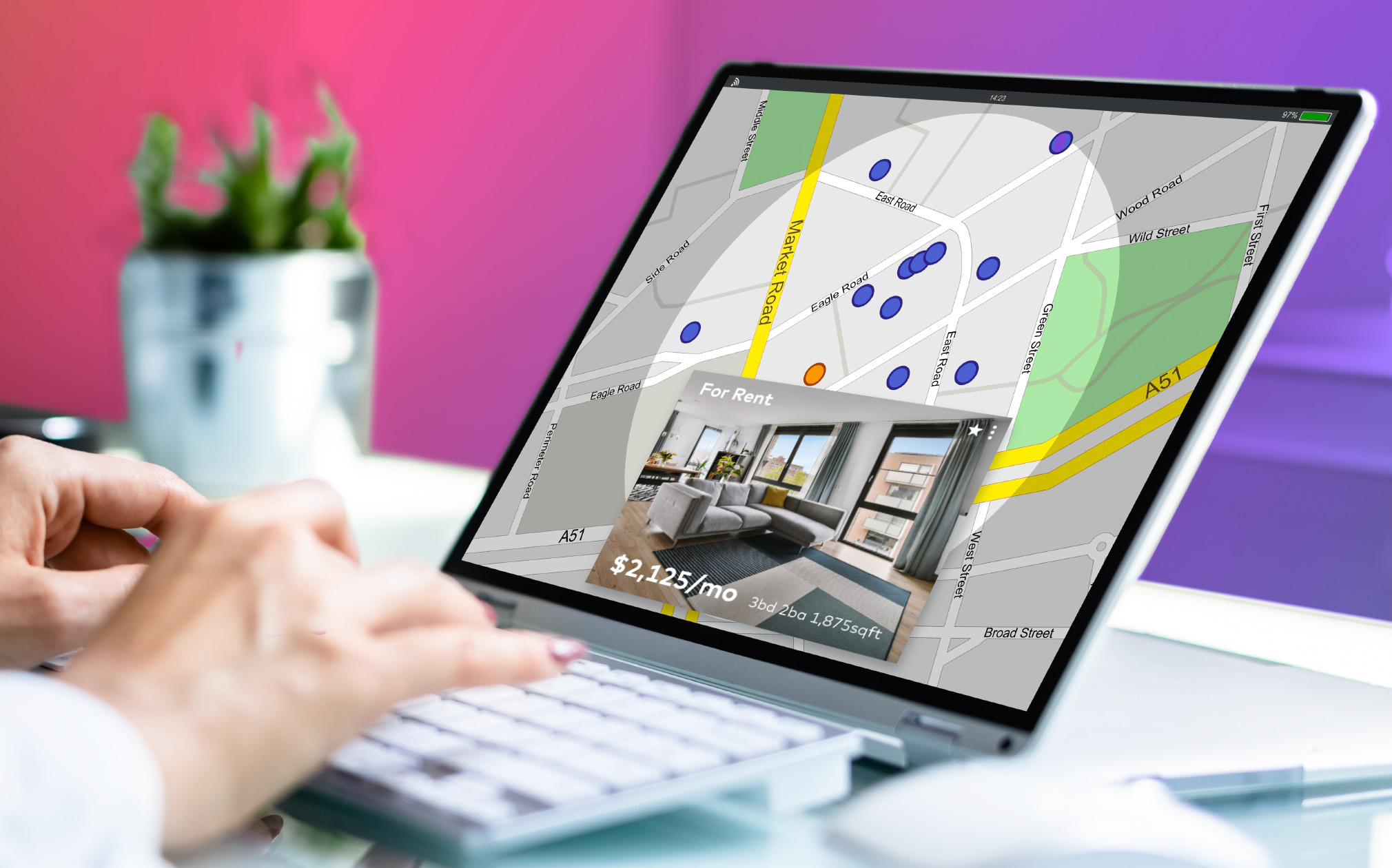
Have you heard the term “neighborhood marketing” recently? It’s making big waves in the industry, and for good reason.
But it’s stirring up lots of questions from apartment marketers. What exactly is neighborhood marketing? Why is it important?
We’re here to help. Keep reading for an introduction to neighborhood marketing for multifamily, complete with three things you can do to get started.
What is neighborhood marketing?
Neighborhood marketing refers to marketing your properties from a given area, all together. In other words, collectively marketing your properties.
The goal is to:
- Target renters searching your neighborhood
- Get more brand exposure in the community
- Drive more high-intent leads and leases
Understanding the marketing funnel
Before we dive deeper into neighborhood marketing, it’s important to understand the marketing funnel (sometimes called the renter funnel).
You know the saying, the more things change, the more they stay the same? That applies here. Despite all the new technologies emerging like AI, LLMs and generative engines, some things remain the same. That includes the marketing funnel.
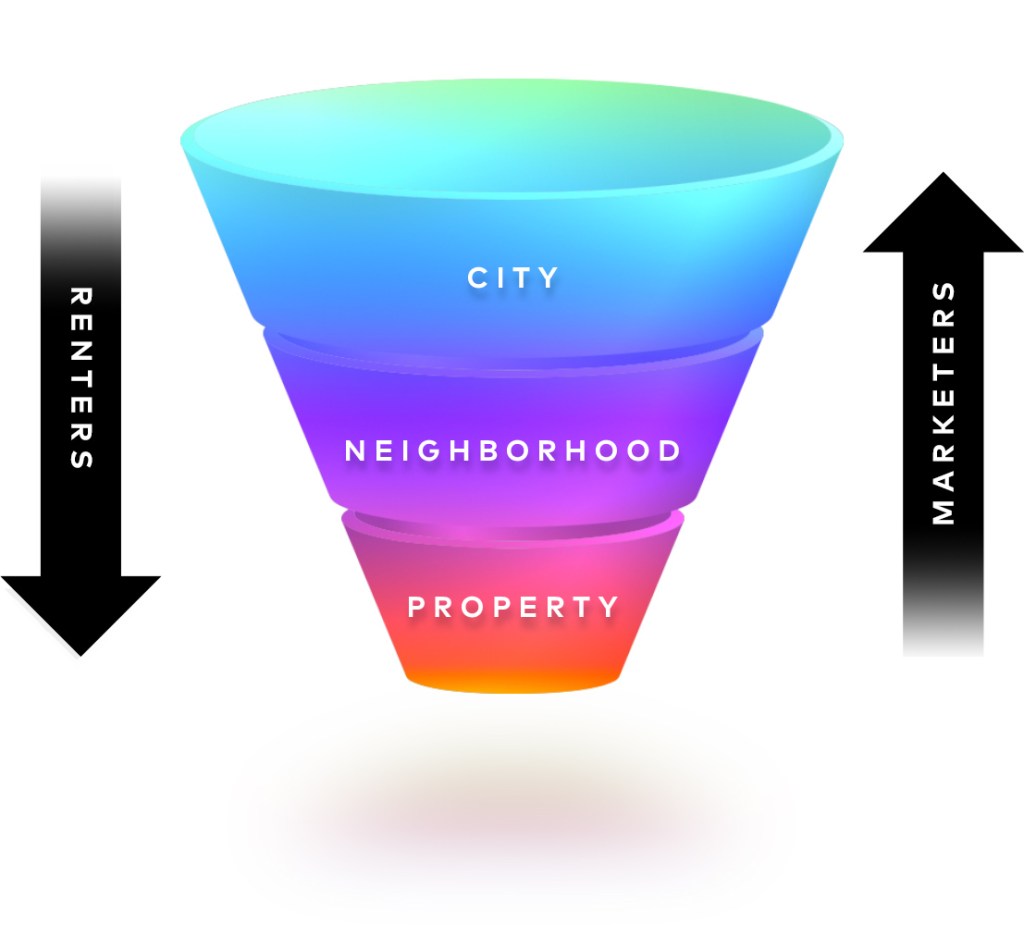
A renter starts at the top of the marketing funnel when they decide they need a new apartment. At this stage, they’re likely searching at the city level (searches like “apartments in San Diego”).
As they narrow their search to specific neighborhoods, they progress down the funnel. As they progress, they become a qualified lead who’s more likely to convert.
Your property — that they’ll eventually lease at — is the end of their journey, at the bottom of the funnel.
From the marketer’s perspective, you’re at the bottom of the funnel, trying to reach renters higher up in the funnel.
Here’s a visual of the directional contrast between renter and marketer:
How the funnel relates to neighborhood marketing
Ok, stick with us here. How does the funnel relate to neighborhood marketing?
Think about the renters searching at the city level (top of the funnel). They aren’t close to signing a lease, meaning they aren’t the most high-intent leads.
Now, by the time they’re conducting property-level searches (bottom of the funnel), they’re very close to signing a lease. But there’s a problem … it’s likely too late to get in front of these renters, if you haven’t already.
That makes neighborhood-level searches (middle of the funnel) the sweet spot. Renters are further in their journey, but they haven’t narrowed down properties just yet. It’s a unique window where you’re most likely to influence their rental decision.
Put differently, the inflection point of the renter journey occurs at the neighborhood level. This is what drives the need for neighborhood marketing.
Why is neighborhood marketing important?
As you’re probably gathering, neighborhood marketing is important because it helps you reach the most high-intent leads, at the right time.
But there’s another reason it’s a winning strategy. In addition to catching renters conducting neighborhood-level searches, you’re also reaching renters searching at the city level. Neighborhood marketing automatically helps you get top-of-the-funnel exposure.
Here’s what we mean: Let’s say you’re publishing well-optimized content about your neighborhood (maybe on a dedicated neighborhood page, learn more about that below). In creating this helpful, neighborhood-focused content, you’re simultaneously referencing the city that neighborhood is in.
This builds authority with search engines and helps your page rank for both neighborhood and city-level queries. Even though renters searching at the city level aren’t high-intent leads yet, the exposure creates brand awareness and trust early in their journey.
To sum it up, neighborhood marketing gets you in front of renters throughout their journey (in the funnel), in a way that’s almost impossible through traditional property marketing.
How to get started
So, what does neighborhood marketing actually look like, and how can you get started? Let’s talk through your website strategy, search strategy and paid strategy.
Create a neighborhood website or page
The most impactful neighborhood marketing strategy is to create a neighborhood website. These are in-depth, optimized sites that market your properties together and have maximum search potential.
An entire site gives:
- More opportunities for keywords
- Better cross-linking power
- Stronger trust signals to Google
Another (still impactful) option is to build a neighborhood page, or pages, on your existing corporate site. It’s a great way to leverage aspects of the first strategy without committing as much time or eating up your budget.
Neighborhood pages won’t have the same depth or search relevance as a neighborhood website, but they still offer significant search potential.
P.S. Wondering what your neighborhood website or pages should include? Read our follow-up neighborhood marketing article … that’s the focus!
Set yourself up for neighborhood optimization
A big part of SEO is keyword optimization. But which keywords make sense for neighborhood marketing?
As you could guess, prioritizing city-level keywords isn’t ideal. Keywords like “apartments in San Diego” are difficult to rank for organically.
It’s more effective to optimize for hyper-local keywords, which are less competitive. These target renters at the neighborhood level by helping you rank in searches like “apartments in (neighborhood).”
But remember: With neighborhood marketing — including optimizing hyper-local keywords — you can rank at the neighborhood level, and as a result, the city level. It’s maximum reach and results, since you’re getting in front of renters earlier in their journey.
There’s no pay-per-interaction model for organic search, so you can afford to cast a wide net, with little downside.
Run neighborhood PPC ads
Last but not least, let’s talk about pay-per-click (PPC) ads.
Think back to the city-level keywords. At the property level, you could spend your entire ad budget bidding on “apartments in San Diego.” But this likely produces the least amount of leases, for the highest cost. City-level keywords are broad, highly competitive terms dominated by ILS ads with millions to spend in their budget.
If you’ve created a neighborhood website or page, you can pool your budget to create ads that highlight your properties (in a given neighborhood) together, rather than running individual ads for each property. That means you’re bidding on neighborhood-based terms, a smarter, more targeted approach that drives stronger results.
By giving renters options, showing them multiple communities in the neighborhood they’re targeting, chances are at least one meets their needs.
Plus, since you’re not devoting spend to individual property ads, you might have money left over for top-of-the-funnel ads. It’s another (bonus) way to reach renters earlier in their journey.
Have questions for us?
Neighborhood marketing helps you take advantage of how semantic and generative search work. At the same time, it leverages how renters move through the marketing funnel to produce the best results … and make the most of your budget.
It can be tricky to navigate on your own, so working with an experienced agency is a smart move. Get in touch if you’d like to see how our experts can help you. We’re also happy to answer your initial questions about neighborhood marketing for multifamily communities.
Until then, stay calm and market on!

Recent posts

We’re living through the biggest shift in search marketing since the search engine was born. To help you make sense of it, Catriona Orosco, senior director at REACH by RentCafe, sat down with Robert Gibbs, head of agency at Google, to talk through what’s actually changing in search and paid search.

Get a better understanding of cookie consent for apartment websites. Find out what you need to know about your options, state laws and how they impact your analytics.

Rental search has changed. Here’s how you should update your SEO and PPC strategies to stay visible in the AI era.
Categories
Similar articles
Google search advertising for multifamily: What’s next, straight from Google
We’re living through the biggest shift in search marketing since the search engine was born. To help you make sense of it, Catriona Orosco, senior director at REACH by RentCafe, sat down with Robert Gibbs, head of agency at Google, to talk through what’s actually changing in search and paid search.
Cookie consent for apartment websites: What marketers need to know
Get a better understanding of cookie consent for apartment websites. Find out what you need to know about your options, state laws and how they impact your analytics.
Search strategy survival kit: SEO & PPC tips for the AI search era
Rental search has changed. Here’s how you should update your SEO and PPC strategies to stay visible in the AI era.